
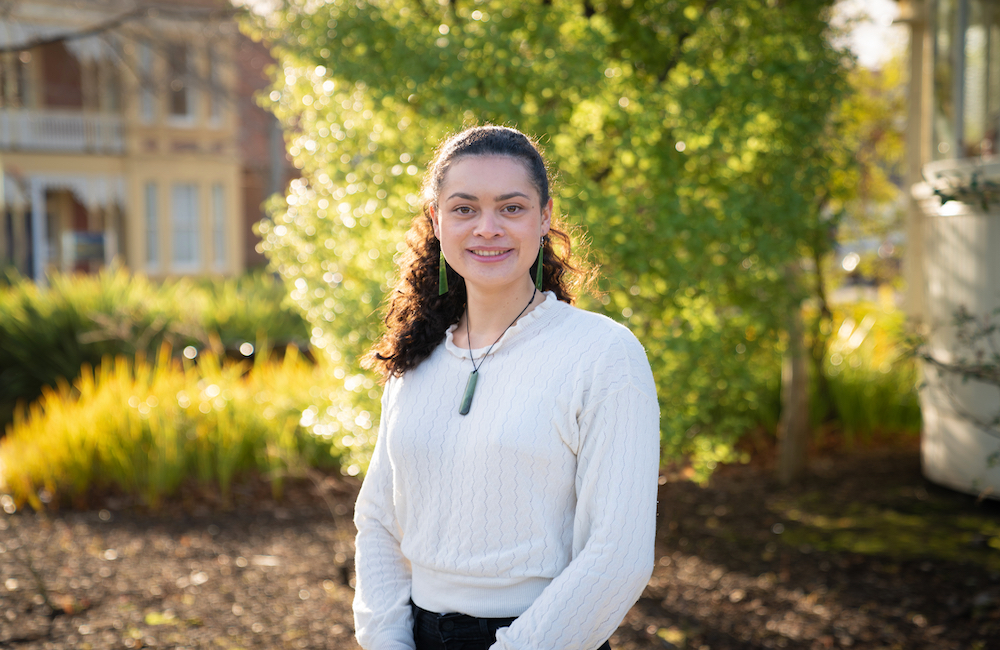
Above: Honorary Mātai Research Fellow, Dr Jordon Lima.
New molecular biology laboratory in Gisborne to host bowel cancer screening project
The Gisborne Herald | 24 April 2026
A bowel cancer research project run through Gisborne-based Mātai Medical Research Institute could improve cancer detection for people across Te Tairāwhiti, says the researcher leading it.
Dr Jordon Lima (Ngāti Porou, Te Aitanga a Hauiti, Ngāpuhi), who was born in Whāngārā on the East Coast, received a 2025 Otago Health Sciences Māori Postdoctoral Fellowship to establish a new molecular biology laboratory at Mātai.
Jordon will use the lab to run a “proof-of-concept study” testing whether a simple blood test can provide timely bowel cancer detection for people in Te Tairāwhiti who are on long waiting lists for a colonoscopy.
Patients on the non-urgent colonoscopy waiting list in Te Tairāwhiti will be invited to provide a blood sample to be tested for circulating tumour DNA (ctDNA), DNA shed from a tumour into the blood. Those results will be compared with colonoscopy data to assess how accurately the blood test can detect tumours.
Currently, those aged between 58 and 74 are offered a self-testing kit from the National Bowel Screening Programme (NBSP) every two years. Those who test positive are referred for a colonoscopy.
The NBSP’s 2024 data found that around seven in 100 people who receive a colonoscopy through the programme are found to have cancer, with at least a third of those cancers detected at an early stage.
Jordon sees an opportunity to build on the strengths of the existing programme by adding a cancer-specific blood test that could help clinicians better identify who needs a colonoscopy most urgently.
“The National Bowel Screening Programme is doing important work and catching cancers early. What a ctDNA test could offer is an additional step that helps direct the right people to colonoscopy sooner, while reducing unnecessary procedures for those who don’t need them,” Jordon says.
Jordon’s research explores whether everyone who returns a positive faecal test could then be offered a ctDNA test.
“The idea is that if your faecal test was positive, you would be offered a ctDNA test. If that came back negative for tumours, you might be able to avoid an invasive colonoscopy. If it came back positive, you could be fast-tracked. It’s about making the pathway work better for people.”
“If the blood test proves feasible, as early-stage research suggests it can, this will mean larger trials to explore how it could be more widely implemented. This could lead to simple, affordable tests for early cancer detection that can be publicly funded and delivered in-community.”
“Potentially, it’s a lifesaver.”
Jordon noted that reducing unnecessary procedures could also ease pressure on already-stretched secondary services in the region, benefiting both patients and the healthcare system.
With a high rural population in Te Tairāwhiti, many people travel long distances to Gisborne Hospital from places such as Te Araroa and Wharekahika/Hicks Bay. A blood test that could be run locally would reduce that burden for those who don’t need to go further.
Jordon did her doctoral research through the University of Otago on the design of Tairāwhiti-specific clinical protocols for ctDNA, using a Kaupapa Māori Biomedical Research approach that required close partnership with Tairāwhiti communities.
“I have been building relationships across health, academic, community, local council, and education sectors with people who are as committed as I am to ensuring research is locally governed and that results are translated back to the community.
“Together, we are working to grow science outreach across the region and use co-design and community-led initiatives to strengthen cancer care equity for all people in Aotearoa.
“I’m not trying to reinvent the wheel here for Te Tairāwhiti. I am simply offering support, time, and energy to bring technologies to our people that can improve our cancer outcomes.”