
New Mātai Innovation Centre will bring together health, research, technology, industry and education
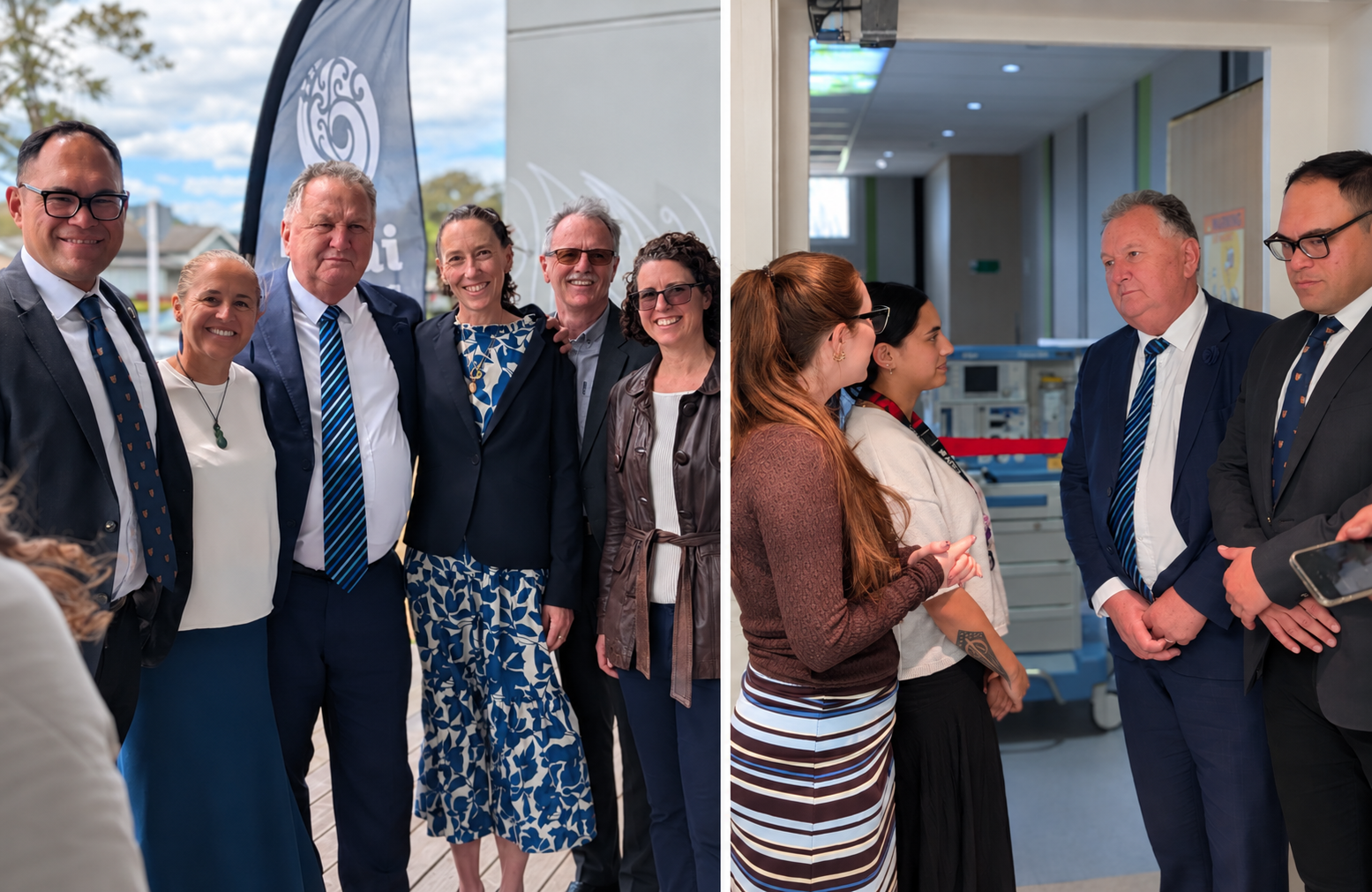
Regional Development Minister Shane Jones visited the Mātai Medical Research Institute today to announce a Regional Infrastructure Fund (RIF) loan of $20 million towards the development of a new Innovation Centre at Mātai in Tairāwhiti-Gisborne. The centre will support the next stage of a growing health, medtech, technology, research and education cluster in Tairāwhiti in one connected campus.
The Innovation Centre is planned as a multi-level shared facility for Mātai and a wider group of health providers, university teams, researchers, technology companies, educators and community organisations. It will support a broad range of clinical, research, technology, education and community activities, with a strong focus on developing and translating new ideas and technologies into practical use.
At its heart is a co-location model – making it easier for researchers, health providers, technology companies, educators and community partners to work alongside one another and share specialist equipment, expertise and infrastructure. It will create an environment where clinicians and allied health professionals can work alongside researchers, engineers and technology developers; students can learn alongside industry and health professionals; and new ideas can move more readily from research through validation, clinical use and translation.
Alongside the RIF investment, Mātai is working closely with Trust Tairāwhiti and Gisborne Holdings Limited, the commercial arm of Gisborne District Council, as key regional partners in progressing the project.
Mātai was established in 2019 following an initial $6 million investment from the Provincial Growth Fund and $1 million from Trust Tairāwhiti, opening its doors in 2020. Mātai also received a $1.5 million grant and a $1.5 million loan through the Regional Strategic Partnership Fund in 2022. Since inception, Mātai has secured over $40 million in research funding, philanthropic contributions, in-kind support and clinical revenue.
The institute has grown into an internationally connected medical imaging research institute working across advanced MRI, artificial intelligence, bioengineering, clinical research, technology development and education. Mātai is advancing new imaging technologies and developing intellectual property, while establishing national and international research partnerships and expanding education and workforce development opportunities for Tairāwhiti.
To date, its education and research programmes have supported 79 research internships, 76 undergraduate scholarships and 23 PhD candidates, helping create pathways into health, science, engineering, medical imaging, AI and research careers.
Mātai Director of Research/CE and University of Auckland Associate Professor Dr Samantha Holdsworth said the Innovation Centre would provide the space and infrastructure needed for that activity to grow.
“Since Mātai opened its doors, our research, education and clinical programmes have grown, along with the number of organisations and people we are working with. The next challenge is having the physical space and infrastructure to support that growth.
“The Innovation Centre is about creating room for more people, organisations and ideas to work together on the Mātai campus, and giving promising research and technology a better pathway towards clinical use, commercial development and wider impact.”
Dr Holdsworth said a major part of the long-term vision was creating stronger local pathways into specialist careers.
“We want young people growing up in Tairāwhiti to be able to see a future here in science, health, engineering and technology.
“We also want researchers, health professionals and technology companies to be able to come to Gisborne, work alongside local partners and communities, and build capability here.
“Over time, our goal is to create an environment where research, innovation, clinical care and education sit much more closely together, with the community at the centre of that development.”
Mātai’s existing research provides examples of the kinds of technologies the Centre could help develop further. These include Amplified MRI (aMRI), which can make previously imperceptible physiological motion visible, and Ultra-High Contrast MRI (UHC-MRI), which is being investigated as a way of revealing subtle tissue abnormalities that may not be visible with conventional MRI.
Mātai’s work is also helping create pathways for new specialist health services in Tairāwhiti, including the introduction of MRI-guided prostate cancer treatment through the Hugh Green Prostate Centre, illustrating how research and technology capability can translate into new options for patients and the local health system.
The Innovation Centre will provide additional space and capability to support the development, validation and translation of technologies such as these into clinical practice, new services, and commercial applications.
Community and iwi partnerships will remain central to the development. Mātai works closely with Tūranga Health across research, education and community initiatives. This includes a methamphetamine recovery and research programme combining community-based care with advanced imaging research examining how the brain and heart are affected by methamphetamine use and recovery.
The wider campus is intended to build on this approach, creating more opportunities for health providers, community organisations, researchers and educators to shape and develop initiatives together in Tairāwhiti.
The Centre is also expected to support further growth in research, education and workforce programmes.
Dr Holdsworth said the aim was to build a pathway that could begin much earlier than employment.
“A young person might first engage with science and technology through a school programme, return as an intern or scholarship student, progress into tertiary or postgraduate study, and eventually have the opportunity to build a specialist career here in Tairāwhiti.
“That is the kind of long-term pipeline we want this development to help make possible.”
Hayden Green, General Manager of Economic Development at Trust Tairāwhiti said: “Economic development at this scale requires more than funding. It takes ambitious local leadership, strong partnerships and a shared commitment to long-term outcomes. This project demonstrates what becomes possible when regional organisations, government and innovators align behind a common vision.”
“Our focus is on bringing partners together and helping shape investment that can act as a catalyst for wider innovation and economic opportunity. The opportunity at Mātai is to diversify and strengthen our regional economy, create higher-value skills and careers, and build pathways for rangatahi that deliver benefits across generations. Mātai shows that world-leading research and innovation can grow from Tairāwhiti. We want our region to be a place where local talent can build a future and new ideas can become lasting economic opportunities.”
Richard Searle, CEO of GHL, said: “GHL is pleased to be continuing to support the development of the Mātai Campus moving from a landowner partner to a direct investor in the exciting next stage.”
Mayor Rehette Stoltz said the investment is a strong vote of confidence in Tairāwhiti and its potential for growth. “Council welcomes the investment by government and partners that builds on the strengths of our region and creates lasting opportunities for our communities.”
“Mātai is showing what is possible when innovation, education, health and industry come together in our region. This next stage has the potential to attract new investment and expertise, create pathways for our rangatahi into high-value careers, and strengthen Tairāwhiti’s economy over the long term.”