
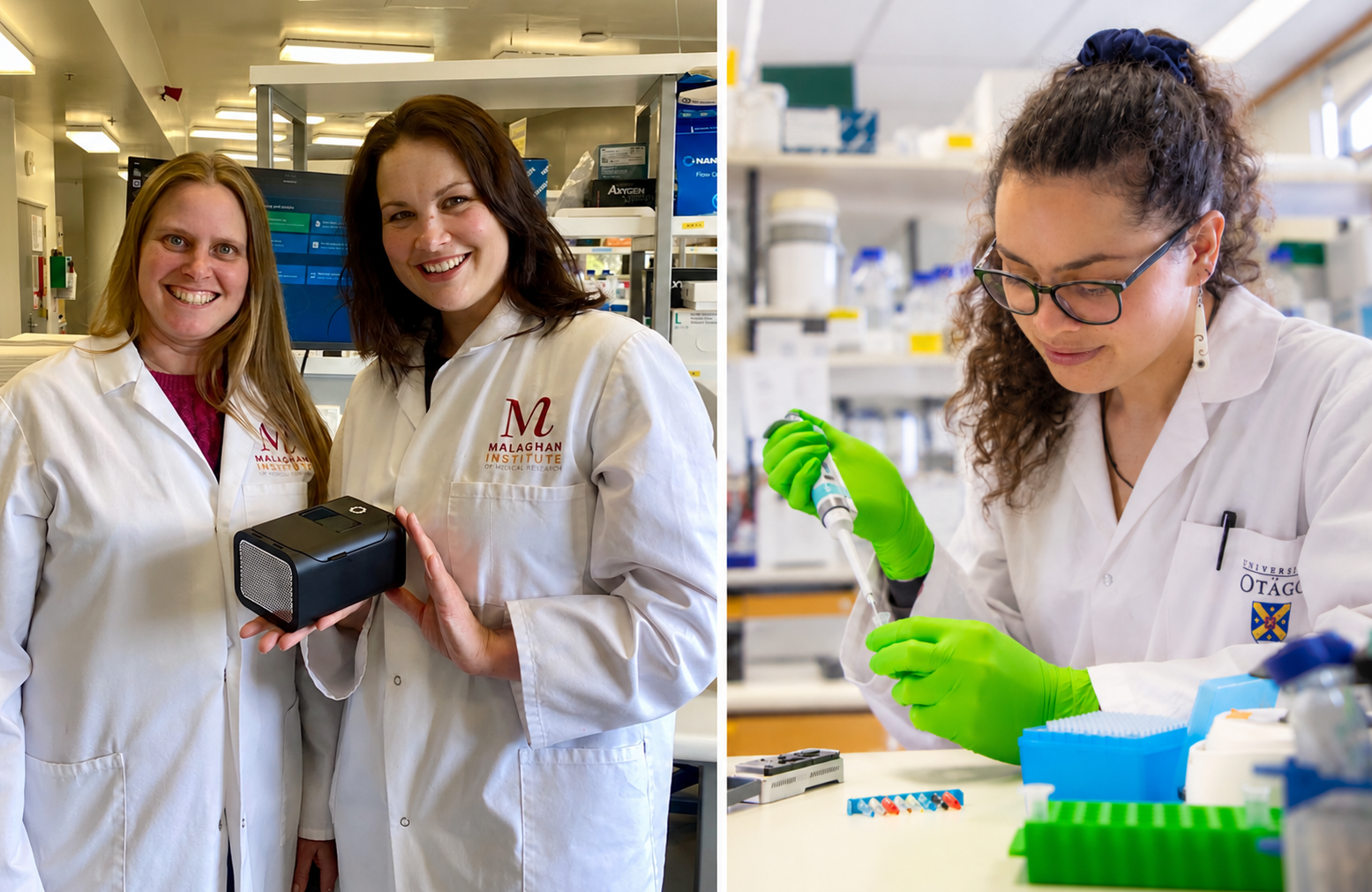
(Left) Malaghan Head of Genomics Dr Ava Handley (right) and her Senior Staff Scientist Sventja von Daake (left) with the P2Solo device that will be transferred to Mātai.
(Right) Honorary Research Fellow at Mātai and Postdoctoral Research Fellow at Ōtākou Whakaihu Waka (University of Otago),Dr Jordon Lima will support community-led genomics research at Mātai, helping build local sequencing capability, skills and governance in Te Tairāwhiti.
Mātai to get DNA sequencer to expand genomics research in Tairāwhiti
A device that could be mistaken for a thick black book is to give Tairāwhiti researchers the ability to do DNA sequencing in the region.
Gisborne’s Mātai Medical Research Institute is getting an Oxford Nanopore PromethION P2 Solo sequencing device from the Malaghan Institute of Medical Research in Wellington.
It reads genetic information in DNA samples.
The device will allow researchers to look for genetic variation, changes in how genes are regulated and biological patterns associated with health, disease and the environment.
Until now, DNA sequencing for research in Tairāwhiti has generally required sending samples outside the region for processing.
Mātai said having sequencing capability meant more of this work could be done locally – from preparing and sequencing samples through to analysing the resulting data, while also building specialist skills and expertise within the region.
Mātai researcher Dr Jordon Lima said an important part was ensuring genomic research developed in a way that reflected local priorities and values.
“This gives us the ability to build genomics capability here in Tairāwhiti, building on projects … rather than always having to send samples and data elsewhere,” Lima said.
“Just as importantly, we are building on tikanga and governance that are already well established through frameworks such as Te Ara Tika, Te Mata Ira and He Tangata Kei Tua, which guide how samples and data are collected, processed, stored and used.
“Every genomic project at Mātai would then be approved through our Māori governance board, Ngā Māngai Māori [Voices of Māori].
“We want to build local capability in a way that upholds kaitiakitanga [guardianship], supports Māori data sovereignty and creates opportunities for people from this region to participate in and lead this type of research.”
The sequencing technology will primarily support the development of Mātai’s molecular biology and genomics research capability, adding another layer of information researchers can use alongside medical imaging, clinical information and other health data.
Potential applications include research into traumatic brain injury, methamphetamine use disorder, gout, cancer detection and screening, as well as genomic research initiatives such as the Rakeiora project, which looked at ways to incorporate new genomic-based medicine into New Zealand’s healthcare system.
DNA contains the biological instructions used by human cells. Small differences in those instructions and changes in how genetic information is regulated could help researchers understand why some people may be more susceptible to particular conditions, why disease develops differently between individuals, or why people may respond differently to injury or treatment, Mātai said.
The immediate purpose of the device is for research rather than clinical diagnosis. The sequencer does not provide a diagnostic test for patients.
Matai said research of this kind could contribute to a shift towards more personalised healthcare where prevention, diagnosis and treatment were informed by the biological characteristics that may influence how conditions developed or responded to treatment.